
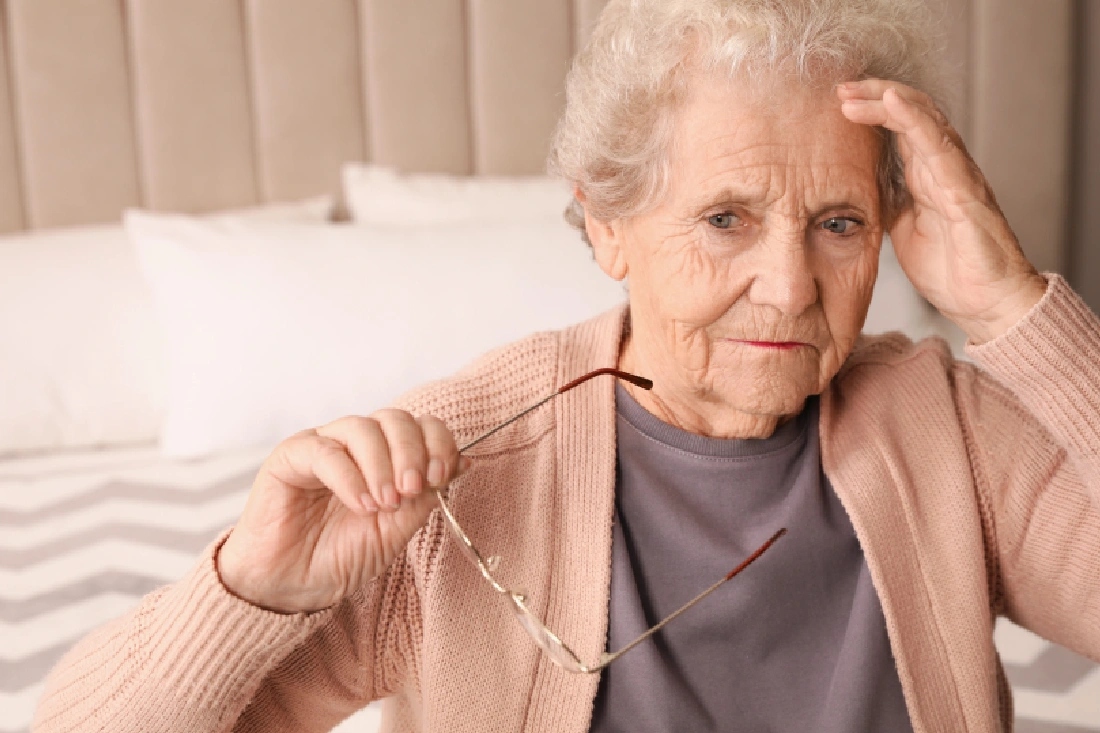
One of the most painful parts of watching a loved one live with dementia is the gradual erosion of conversation. The person is still there. They still respond to your presence, still light up when you walk into the room, still have moments of clarity that feel like the person you have always known. But getting to those moments becomes harder as language and communication break down in ways that can feel confusing and discouraging.
Understanding why communication changes in dementia, and what actually helps, makes a real difference. Not just for the person with dementia, but for the people who love them.
What Dementia Does to Language
Communication difficulties are present in every subtype of dementia, though they vary in timing and character depending on which part of the brain is affected first. A 2024 systematic review published in Dementia by Harris and colleagues at University College London identified the most common communication challenges as word-finding difficulties, impaired verbal comprehension, and a reduced ability to initiate conversations.
In Alzheimer’s disease, language difficulties typically emerge after memory problems and worsen as the disease progresses through its stages. Early on, a person may pause frequently while speaking, searching for a word that will not come. They may substitute a related word for the one they mean, or describe an object rather than name it. They may lose track of what they were saying mid-sentence. These are not signs of disinterest or inattention. They reflect the damage occurring in the temporal lobes, where the brain processes and retrieves language.
As the disease advances, comprehension becomes impaired alongside expression. The person may have difficulty following multi-step instructions or keeping up with fast-moving conversations. Eventually, in the later stages, verbal communication may reduce to single words, brief phrases, or sounds, even as the person continues to communicate meaning through facial expression, tone of voice, and body language.
In frontotemporal dementia, the communication picture looks different. Because this type of dementia affects the frontal and temporal lobes from the beginning, language difficulties can be among the very first symptoms, sometimes before any memory problems appear. Some variants of frontotemporal dementia directly affect the language network, causing progressive loss of words or the ability to construct grammatical sentences. Other variants primarily affect social communication, with the person losing the ability to read social cues, modulate tone appropriately, or understand the emotional meaning behind what others say.
Why Non-Verbal Communication Stays Longer
One of the most clinically significant findings in dementia communication research is that non-verbal communication is preserved considerably longer than verbal ability. A 2023 systematic review published in the International Journal of Language and Communication Disorders noted that people with dementia retain a desire for social connection and the ability to express and receive meaning through non-verbal channels well into later stages of the disease.
This means that a person who can no longer carry on a conversation may still respond meaningfully to a warm tone of voice, a familiar piece of music, a touch on the hand, or a smile. It means that the emotional content of an interaction can land even when the words do not. And it means that the relationship between a person with dementia and the people who care for them does not have to end when verbal communication becomes difficult. It changes form, but it does not disappear.
This is worth knowing because many family members pull back from communication as dementia progresses, under the impression that their loved one can no longer understand or benefit from interaction. The research suggests that impression is often wrong.
What the Research Says Actually Helps
A 2025 review published in the Iraqi Journal of Community Medicine synthesized evidence on effective communication strategies for people with dementia across multiple databases. The findings are consistent with what speech language pathologists have recommended clinically for years, now with a stronger evidence base behind them.
Use simpler language, but do not talk down. Short sentences, common words, and one idea at a time reduce the cognitive load of comprehension without being condescending. The key distinction is simplicity of structure, not simplicity of respect.
Slow down. People with dementia need more processing time than they did before. Pausing after speaking, waiting longer for a response, and resisting the urge to fill silence with more words gives the person a better chance of understanding and responding.
Ask yes or no questions when possible. Open-ended questions like “what would you like to do today?” can be overwhelming. “Would you like to go outside?” is easier to process and respond to. This is not about limiting the person. It is about giving them a form of question their brain can still handle.
Do not correct or argue. If a person with dementia says something that is factually wrong, correcting them rarely helps and often causes distress. If your mother says her own mother is coming to visit, telling her that her mother has been dead for thirty years serves no purpose other than to cause pain. Redirecting the conversation, or entering gently into their reality rather than fighting it, is a more compassionate and effective approach. This is sometimes called therapeutic fibbing in the clinical literature, and while the terminology is clinical, the principle is straightforward: the goal is the person’s wellbeing, not factual accuracy.
Use their name. Using a person’s name at the start of a sentence helps orient their attention and signals that you are addressing them specifically. It is a small adjustment with a meaningful effect on engagement.
Pay attention to what the body is saying. Since non-verbal communication is preserved longer than verbal ability, reading the person’s facial expression, posture, and tone of voice matters as much as listening to their words. Likewise, your own non-verbal communication matters. A calm tone, relaxed posture, and eye contact communicate safety and connection even when the words are hard to follow.
Do not talk about them as if they are not in the room. This happens frequently in clinical and care settings, and it happens at home too. People with dementia, even those with significant verbal impairment, often understand more than they can express. Conversations conducted around them rather than with them are not respectful, and they are often registered.
When Communication Feels Like It Has Broken Down Completely
In the later stages of dementia, when verbal communication has reduced significantly, families sometimes feel there is nothing left to do. That is rarely true.
Sitting together quietly, playing familiar music, looking through old photographs, holding hands, reading aloud from a book or a passage the person always loved, these forms of presence and connection continue to matter. Research on music and dementia, which we will cover in a separate post, shows that musical memory is among the most preserved functions even in advanced dementia. The response to familiar songs, to voices that are loved, to touch that is gentle and familiar, continues long after the ability to form a sentence is gone.
The goal in late-stage dementia communication is not information exchange. It is presence. The science supports the idea that presence still registers, and that it matters.
If you are trying to understand why communication changes the way it does in dementia, our post on what dementia does to the brain explains the underlying neuroscience behind language loss and why different types of dementia affect communication in different ways.
Have questions about memory care for a loved one?
We are happy to talk. Whether you are just starting to research your options or are further along in the process, feel free to call us, send an email, or schedule a tour of our home. No pressure, just a straightforward conversation.
463-444-9064 | Ben@HonorHavenSeniorLiving.com | Schedule a Tour
Sources
– Harris C, et al. What are the communication guidelines for people with dementia and their carers on the internet and are they evidence based? A systematic review. Dementia. 2024;24(3):577-594.
– Volkmer A, et al. Communication is difficult: Speech, language and communication needs of people with young onset or rarer forms of non-language led dementia. International Journal of Language and Communication Disorders. 2024;59(1).
– Cotelli M, et al. Language and Communication Interventions in People with Alzheimer’s Disease: A Systematic Review. PMC. 2024.
– Egan M, et al. Do communication interventions affect the quality-of-life of people with dementia and their families? A systematic review. Aging and Mental Health. 2023;27(8):1666-1675.
– Alazzam A, et al. Enhancing Communication with Older Adults with Cognitive Impairment. Iraqi Journal of Community Medicine. 2025;38(2):107-111.
– Alzheimer’s Association. 2024 Alzheimer’s Disease Facts and Figures. Alzheimer’s & Dementia. 2024.