
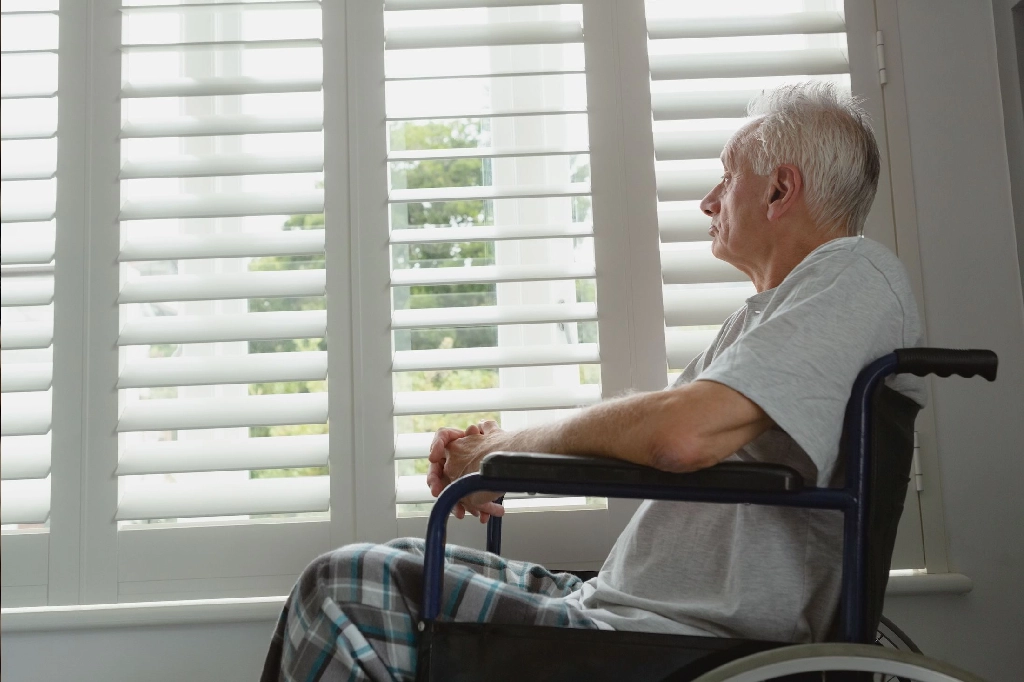
Veterans develop dementia at higher rates than the general population, and the reasons are specific to military service rather than incidental to it. Traumatic brain injury, PTSD, blast exposure, chemical exposure, and chronic sleep disruption all carry independent associations with cognitive decline, and veterans are exposed to all of them at rates civilians are not.
There is also a second gap, separate from the medical one: a significant share of veterans and their families never claim benefits they are eligible for, in part because the connection between military service and dementia is not widely understood and in part because the benefits themselves are poorly publicized.
Why the Risk Is Higher
Traumatic brain injury. TBI is substantially more common in military populations than civilian ones, driven by blast exposure, combat injury, training accidents, and vehicle incidents. A review published through Oxford examining dementia risk factors in military and veteran populations found that the TBIdementia association has become widely accepted, with moderate-to-severe TBI specifically associated with increased risk of Alzheimer’s disease. Research in veteran populations has found that even mild TBI was associated with more than a twofold increase in dementia risk.
PTSD. Studies have found that veterans with PTSD are more than twice as likely to develop dementia than veterans without it. The same Oxford review noted that while the correlation between PTSD and dementia is established, whether the relationship is causal remains unclear. Proposed mechanisms include chronic cortisol elevation, hippocampal volume loss, sustained inflammation, and the downstream effects of disrupted sleep.
The combination is worse than either alone. Veterans with both PTSD and TBI carry higher risk than veterans with either condition in isolation. Given how frequently the two co-occur in combat veterans, this overlap affects a substantial population.
Agent Orange. A study of Vietnam-era veterans receiving care through the Veterans Health Administration found that those with documented Agent Orange exposure were nearly twice as likely to develop dementia as those without exposure. The researchers adjusted statistically for the fact that Agent Orange-exposed veterans also had higher rates of PTSD and TBI in their records. A separate 2024 study published in the Journal of Prevention of Alzheimer’s Disease examining Korean Vietnam War veterans found significantly increased risk across dementia types, including Alzheimer’s disease, vascular dementia, and unspecified dementia.
The mechanism is not settled. One hypothesis is that dioxin stored in fat tissue is slowly released and exerts toxic effects on the brain. Another is that Agent Orange raises the risk of other conditions that are themselves dementia risk factors, making the effect indirect. It may be both.
Sleep. Sleep problems are common following TBI, PTSD, and deployment generally, and poor sleep carries its own association with dementia risk. This may be one of the pathways through which the other exposures operate.
The Benefits Picture
This is where it gets complicated, and where families most often lose out.
Service connection for dementia. Dementia can be service-connected when it is secondary to an already service-connected condition. The clearest path is TBI: where a veteran has a service-connected traumatic brain injury and later develops dementia, that dementia may be connected on a secondary basis, given the established association between TBI and later neurodegeneration.
Agent Orange is harder. Dementia and Alzheimer’s are not currently on the VA’s presumptive list for Agent Orange exposure, meaning a veteran cannot simply point to exposure and documented dementia. A claim requires building the evidentiary connection, usually with a supporting medical opinion. Lewy body dementia may be an exception in some cases, because of its relationship to Parkinson’s disease, which is a presumptive condition for Agent Orange exposure.
This is an area where the research and VA policy are not aligned. VA researchers have published findings on the association between service-related TBI, PTSD, toxic exposure, and dementia, while the VA’s formal position has been that there is no recognized association between military service and dementia as such. Families should expect the claims process to reflect that tension.
Aid and Attendance. This is the benefit most families do not know exists, and it is frequently the most useful one. Aid and Attendance is an increased monthly pension available to wartime veterans and surviving spouses who need help with activities of daily living bathing, dressing, eating, toileting, transferring or who are in a residential care setting because of that need.
It is needs-based rather than service-connection-based, meaning it does not require proving the dementia is related to service. It has income and asset limits and requires qualifying wartime service. For a veteran or surviving spouse paying privately for memory care, Aid and Attendance can meaningfully offset the cost.
VA health care and residential options. Veterans enrolled in VA health care have access to dementiarelated care, and the VA operates Community Living Centers. State Veterans Homes exist in most states, including Indiana, and typically offer substantially lower rates than private pay facilities, though waitlists are common.
The PACT Act. The 2022 PACT Act broadened VA health care eligibility and added presumptive conditions for veterans exposed to burn pits, Agent Orange, and other toxins. It did not add dementia as a presumptive condition, but it expanded eligibility and enrollment for many veterans who were previously excluded, which matters for access to care generally.
Practical Steps
Get the service-connected conditions documented first. If a veteran has a service-connected TBI, PTSD, or other relevant condition, that rating is the foundation for any later secondary claim. Veterans who never filed for conditions they had at separation are at a disadvantage years later.
Use an accredited representative. VA claims for dementia are harder than claims for most conditions, and the process rewards people who know it. Veterans Service Organizations the VFW, American Legion, DAV, and others provide accredited representatives at no cost. County Veterans Service Officers do the same. Most states, Indiana included, have them at the county level.
Apply for Aid and Attendance early. Processing takes months. Families who apply when they are already in crisis wait through the worst of it.
Keep documentation. Service records, deployment history, exposure documentation, medical records showing TBI or PTSD treatment, and a clear record of the dementia diagnosis and its progression all matter to a claim.
For Families
A veteran with dementia often carries history their family only partly knows. Combat exposure, injuries that were never reported, and experiences that were never discussed can all surface during the disease, sometimes as agitation or distress that appears unprovoked.
Care approaches that account for military history awareness of trauma triggers, attention to how a person responds to being approached from behind or to being physically assisted, and respect for the identity that service conferred tend to work better than generic approaches. Several formal programs exist to train care staff in veteran-specific considerations, and it is a reasonable question to ask of any care setting.
Traumatic brain injury is one of the strongest drivers of elevated dementia risk in veterans. Our post on head injury and dementia risk covers the broader research on TBI and neurodegeneration, including the dose-response relationship between injury severity and later risk.
Have questions about memory care for a loved one?
We are happy to talk. Whether you are just starting to research your options or are further along in the process, reach out anytime.
463-444-9064 | Ben@HonorHavenSeniorLiving.com | Schedule a Tour
Sources
- Dementia in military and veteran populations: a review of risk factors traumatic brain injury, posttraumatic stress disorder, deployment, and sleep. University of Oxford Research Archive. Peer reviewed.
- Martinez S, et al. Association Between Agent Orange Exposure and Dementia Diagnosis in US Veterans of the Vietnam Era. JAMA Neurology. 2021.
- Risk of Dementia in Korean Vietnam War Veterans. Journal of Prevention of Alzheimer’s Disease. 2024;11(5):1378-1383.
- Barnes DE, et al. Association of Mild Traumatic Brain Injury With and Without Loss of Consciousness With Dementia in US Military Veterans. JAMA Neurology. 2018;75(9):1055-1061.
- Yaffe K, et al. Posttraumatic stress disorder and risk of dementia among US veterans. Archives of General Psychiatry. 2010;67(6):608-613.
- Livingston G, et al. Dementia prevention, intervention, and care: 2024 report of the Lancet standing Commission. The Lancet. 2024;404(10452):572-628.